


On the worst days, when the backyard would flood and the toilet would gurgle and the smell of sewage hung thick in the air, Monica Arenas would flee to her mother-in-law’s home to use the bathroom or wash laundry.
“It was a nightmare,” Arenas, 41, recalled one evening in the modest house she shares with her husband and teenage daughter several miles north of downtown Miami.
She worried about what pathogens might lurk in the tainted waters, what it might cost to fix the persistent problems, and whether the ever-present anxiety would ever subside.
Residents in neighborhoods around Arenas have similar tales to share — of out-of-commission toilets, groundwater rising through cracks in their garage floors, and worries about their own waste running through the streets and ultimately polluting nearby Biscayne Bay.
For all the obvious challenges facing South Florida as sea levels surge, one serious threat to public health and the environment remains largely out of sight but everywhere:
Septic tanks.
According to a Washington Post analysis, millions of them dot the American South, a region grappling with some of the planet’s fastest-rising seas. At more than a dozen tide gauges from Texas to North Carolina, sea levels have risen at least 6 inches since 2010 — a change similar to the previous five decades.
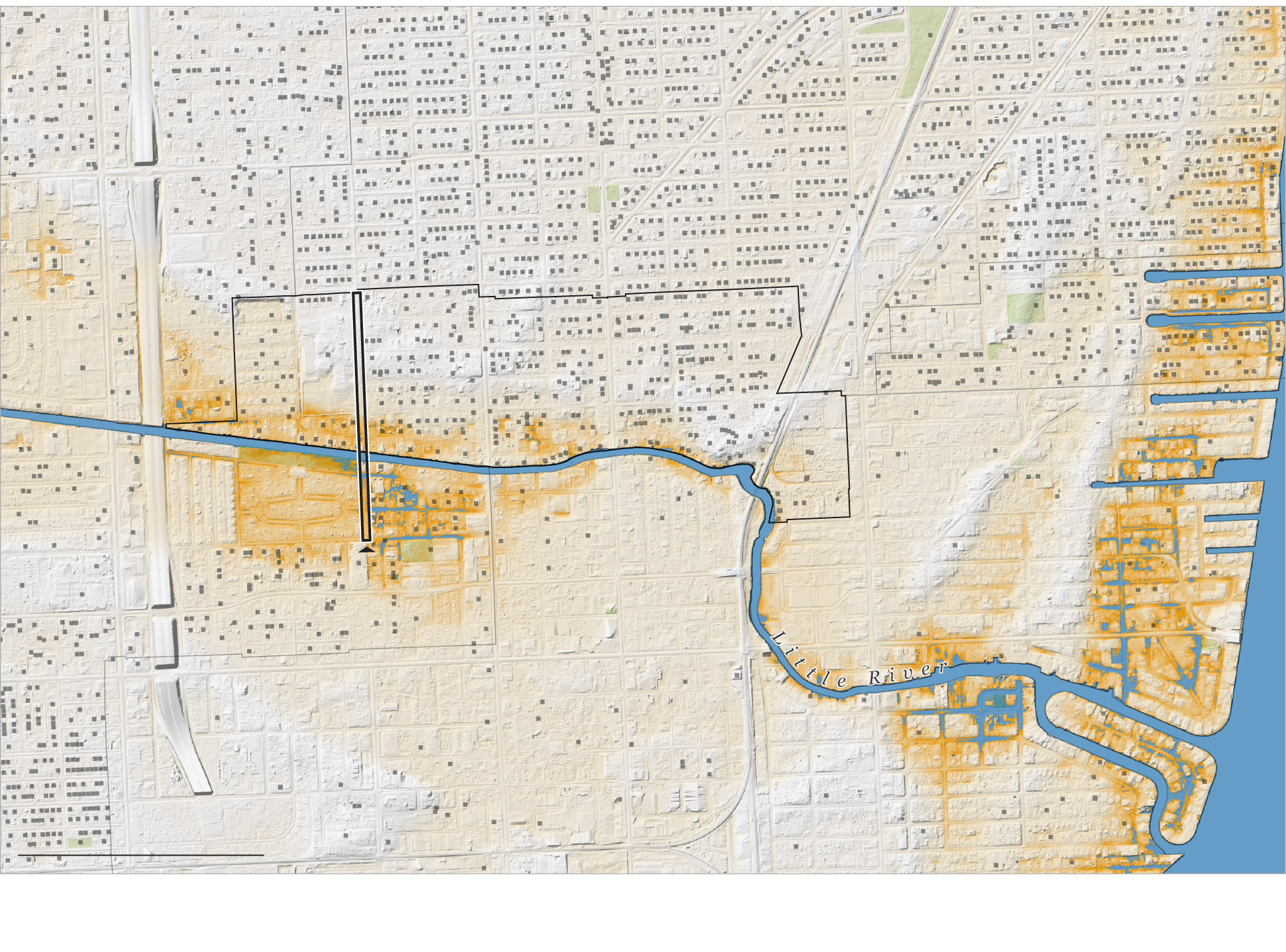
Along those coastlines, swelling seas drive water tables higher and create worries in places where septic systems abound but where officials often lack reliable data about their location or how many might already be compromised.
“These are ticking time bombs under the ground that, when they fail, will pollute,” said Andrew Wunderley, executive director of the nonprofit Charleston Waterkeeper, which monitors water quality in the Lowcountry of South Carolina.
To work correctly, septic systems need to sit above an adequate amount of dry soil that can filter contaminants from wastewater before it reaches local waterways and underground drinking water sources. But in many communities, that buffer is vanishing.
A diagram titled “How rising waters threaten septic systems” The most common type of septic system relies on gravity to move sewage through a tank where solids settle, and liquid waste is slowly released into the soil through a series of perforated pipes called a drain field. The soil acts as a natural filter, neutralizing germs and pollutants before they can contaminate groundwater. Sea level rise and extreme rainfall are raising groundwater levels, resulting in more shallow buffers of soil that help protect local waterways and underground aquifers. If a conventional septic system becomes submerged, wastewater will not be properly treated. Toilets can stop working, and sewage can flood yards.
An estimated 120,000 septic systems remain in Miami-Dade County, their subterranean concrete boxes and drain fields a relic of the area’s feverish growth generations ago. Of those, the county estimated in 2018, about half are at risk of being “periodically compromised” during severe storms or particularly wet years.
Miami, where seas have risen six inches since 2010, offers a high-profile example of a predicament that parts of the southeast Atlantic and Gulf coasts are confronting—and one scientists say will become even more pervasive as waters continue to rise.
A chart showing annual average sea levels at Virginia Key, Biscayne Bay, Florida, where, according to Post analysis, seas have risen 6.0 inches since 2010. The chart shows linear trends for two periods: 1932-2009, where the trend is 0.1 inches per year, and 2010 to 2023, where the trend is 0.4 inches per year.
Here, expensive repairs afflict homeowners as septic systems falter. Fetid water increases the risk of gastrointestinal diseases and other health hazards as floodwaters fill yards and streets. Profound worries persist about the environmental toll — which, researchers in Miami say, means submerged septic tanks are leaking nutrients into the porous limestone, potentially fueling algae blooms that kill fish.
“It’s really pretty gross,” said Michael Sukop, a hydrogeologist at Florida International University.
Rising seas will only exacerbate the problem, he added. “As the water table gets higher, all bets are off.”
Miami-Dade County is racing to replace as many septic tanks as possible as quickly as possible. But it is a tedious, expensive, and daunting task, one that officials say will ultimately cost billions of dollars they don’t yet have.

It also is far beyond a Florida problem.
In Georgia, officials have documented more than 55,000 septic tanks in counties near the Atlantic Coast in an ongoing data-gathering effort. Researchers estimate that in North Carolina, the discharge from approximately 1 million septic systems drains to waterways that eventually reach the ocean. The issue has been the subject of legal fights and proposals in the state legislature in South Carolina.
In numerous states, researchers are studying the potential effects of what they call a largely unseen and unquantified environmental and public health threat.
“We don’t even know the scale of the problem,” said Rob Young, director of the Program for the Study of Developed Shorelines at Western Carolina University. “I think it’s everywhere. And it can’t get better as long as sea levels are rising. The only question is how quickly it can get worse.”


An environmental mess
More than 700 miles north of Miami, Mike O’Driscoll is among the scientists trying to decipher how quickly rising seas drive water tables higher and why that matters.
O’Driscoll, a coastal studies professor at East Carolina University, and several colleagues have spent recent years documenting how rising groundwater alters the hydrology along the Outer Banks in North Carolina.
In Nags Head, the group installed technology to monitor nearly a half-dozen aquifer wells for fluctuations in groundwater levels. They compared their findings to similar data from the North Carolina Department of Environmental Quality stretching back to 1983, and a clear trend emerged: Rising sea levels are raising the groundwater.
“If you look around the Outer Banks, the groundwater has risen one and a half feet in some places,” O’Driscoll said.
Depending on the soil type, North Carolina requires about a foot to a foot and a half of separation between septic drain fields and the seasonal high-water table. But in places, that cushion is dwindling.